Views: 4 Author: Site Editor Publish Time: 2026-09-21 Origin: Site
Discover high-pressure Ermeto-style fittings at Fitsch. Source C35/C45 carbon steel & SS304/SS316 cutting rings or EO-2 elastomeric seals. Get a quote today!
In high-pressure hydraulic systems, system integrity and leak-free performance are critical. Among the most trusted connection solutions globally are Ermeto fittings, a foundational technology originally pioneered by Ermeto and popularized by Parker Hannifin through their Parker Ermeto and Parker EO fittings lines.
For engineers, procurement managers, and hydraulic technicians, understanding the standards, mechanics, and sourcing options for these components is vital to ensuring long-term operational safety. Below is a comprehensive guide to understanding these flareless fluid connectors and how to source high-quality alternatives for your project.
1. What Are Ermeto Fittings?
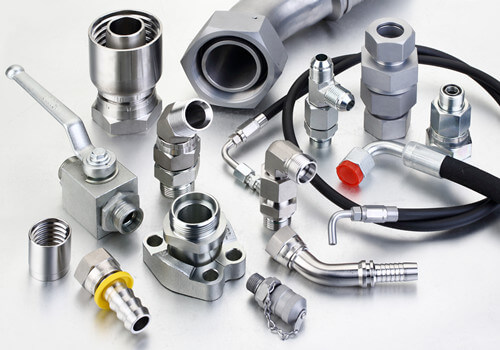
Ermeto fittings are high-pressure, flareless metric fluid connectors designed for hydraulic tubing. Unlike traditional flared tube connections that require specialized flaring tools, these components rely on a mechanical bite-and-compress mechanism. They are used heavily in industrial machinery, construction equipment, shipbuilding, and offshore oil and gas operations.
Commonly referred to as cutting ring fittings or bite type fittings, their design consists of three primary components:
The Fitting Body: Features a 24° inner cone.
The Nut: Drives the mechanical connection.
The Cutting Ring (Ferrule): The engineered ring that bites into the tube surface to create a leak-tight seal.
The Evolution of Leak-Free Connections: EO-2 Elastomeric Seals
While the traditional metallic cutting ring fittings provide a reliable metal-to-metal seal, modern heavy-impulse systems often upgrade to elastomeric sealing technology. The EO-2 system introduces an elastomeric seal (EO-2) cutting ring design. [1]
Instead of relying purely on metal contact, the EO-2 ring features a built-in soft elastomeric seal (typically NBR or FKM/Viton) at the primary sealing point. This soft-seal design completely fills any microscopic imperfections between the tube outer diameter and the fitting body, offering absolute gas-tight performance and eliminating the "sweating" common in standard metal-to-metal joints under severe pressure vibrations. You can view functional details on specialized alternatives via the Fitsch EO2 Hydraulic Fittings Catalog.
2. Technical Standards: DIN 2353 and ISO 8434-1
The global market for these fittings relies on standardized geometry to ensure interchangeability across different manufacturers. When sourcing or designing a system, you will look for two primary regulatory standards:
DIN 2353 Fittings: This is the classic German industry standard that defined the original 24° compression cone engineering principles. Detailed charts are available on the Fitsch DIN 2353 Size Chart Resource. [1]
ISO 8434-1 Fittings: This is the modern international standard. It directly aligns with and incorporates the older DIN 2353 dimensional tolerances and pressure performance characteristics. Technical breakdowns can be viewed at the Fitsch ISO 8434-1 Identification Guide. [1]
Because these parts are manufactured using metric dimensions, they are widely cataloged as metric compression fittings. They are divided into three distinct pressure series to match specific application demands: [1]
LL Series (Extra Light): For low-pressure applications, plastic tubing, or pneumatic control lines.
L Series (Light): For standard industrial medium-to-high pressure applications (up to 315 bar).
S Series (Heavy): For extreme high-pressure, severe-vibration, and high-impulse environments (up to 630 bar). [1]
3. How the Cutting Ring Mechanism Works
The core reliability of this connection lies in the progressive cutting ring. When assembling a metric tube line, the operator tightens the functional nut onto the body thread. As the nut moves forward, it forces the cutting ring along the internal 24° cone of the body. [1]
       [Nut Tightening Force] --->
=========================+   +=========================

                         |   |  <-- Ring/EO-2 Elastomer deforms
   FITTING BODY 24° Cone | \ |      and bites into the tube

                         |   |
=========================+   +=========================
First Cutting Edge: The primary edge of the ring cuts progressively into the outer diameter of the tube, raising a visible collar of metal in front of it. This serves as the primary sealing zone and mechanical stop. [1]
Second Cutting Edge: A secondary trailing edge evenly distributes the internal stresses, protecting the connection against severe system vibrations and pressure spikes.
Rear Grip: The back section of the ring wedges firmly onto the outer tube diameter to provide anti-vibration dampening. [1]
4. Material Specifications & Structural Design
The operational environment dictates the material choices and mechanical strengths required for your hydraulic assembly. Ermeto-style fittings are primarily produced in the following metallurgical compositions:
Carbon Steel (C35 or C45): High-quality structural carbon steels like C35 and C45 are the backbone of high-pressure industrial machinery. They provide excellent yield strength and wear resistance. These are typically treated with zinc-nickel or zinc-trivalent platings to prevent atmospheric rust. A broad overview of options can be sourced directly via the Fitsch DIN Tube Fittings Hub.
Stainless Steel (SS304 / SS316 / SS316L / SS316Ti): Critical for chemical processing, marine systems, and offshore engineering. Sourcing a high-quality stainless steel cutting ring ensures the connection maintains its sealing forces even under aggressive thermal shifts. While SS304 offers excellent general-purpose corrosion resistance for external environments, premium SS316, 316L, or titanium-stabilized 316Ti are specified for highly aggressive chemical exposure and acidic media. [1, 2]
5. Decoding Part Numbers in the Ermeto Fittings Catalogue
When exploring an ermeto fittings catalogue to design your system layout, understanding the standard part number syntax makes cross-referencing straightforward. Part numbers are built sequentially using the fitting style, tube outer diameter (OD), pressure series, and material code.
Breakdown of Standard Nomenclature:
A typical Ermeto part number follows a structured logic, for example: G 12 L A3C or WE 16 S 71
Prefix / Style Code: Denotes the shape and function of the fitting body.
G: Straight Union (Gerade)
WE: Male Stud Elbow (Winkel-Einschraub)
TE: T-Union (T-Verschraubung)
Tube Dimension: Indicates the outer tube diameter (OD) in millimeters (e.g., 12 = 12mm tube, 16 = 16mm tube).
Pressure Series: Denotes the duty cycle (LL, L, or S).
Material / Surface Coating Suffix:
A3C / CF: Carbon Steel (typically forged from C35 or C45) with Zinc-Nickel or Trivalent Chrome plating.
71 / SS: Stainless Steel (such as SS304 or SS316).
If you are sourcing an integrated elastomeric seal (EO-2) cutting ring assembly, the part numbers will often include specific identifiers such as EO2 or functional assembly suffixes (like ZEL or ZES), indicating a pre-assembled nut and soft-seal ring kit. Comprehensive downloadable data can be found on the Fitsch Technical Download Page. [1]
Sourcing Reliable Alternatives with Fitsch
While Parker Ermeto remains a market standard, modern international sourcing often requires cross-compatible, high-precision alternatives to manage lead times and project budgets effectively.
At Fitsch, we specialize in manufacturing and supplying a comprehensive range of premium hydraulic tube fittings engineered to the exact dimensional and performance criteria of DIN 2353 and ISO 8434-1. Whether your system demands heavy-duty C35/C45 carbon steel metric adapters, SS304 or SS316 corrosion-resistant components, or advanced elastomeric seal (EO-2) cutting ring configurations, our manufacturing processes guarantee exact interchangeability with global tier-1 brands. [1, 2, 3]
Explore the Fitsch Metric Fitting Catalog or contact our engineering desk today to submit your cross-reference part numbers and RFQs.