Views: 3 Author: Site Editor Publish Time: 2026-01-12 Origin: Site
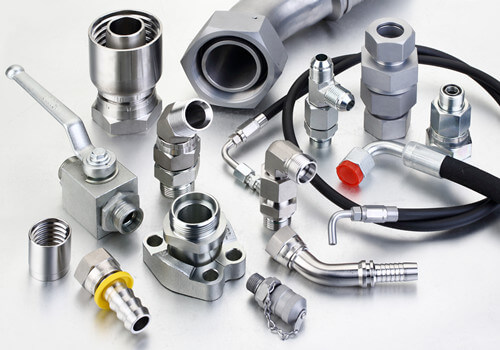
Stainless steel fittings are often overlooked, yet they play a decisive role in the long-term reliability of industrial fluid systems. Whether it’s a hydraulic press, a marine engine, or a renewable energy installation operating for years without failure, the durability of its connections is rarely accidental. Stainless steel fittings provide exceptional corrosion resistance, high-temperature tolerance, and dependable leak-free performance, making them a preferred choice across demanding industries.
If you are involved in designing, installing, or maintaining hydraulic, pneumatic, or fluid-handling systems, understanding the six primary families of stainless steel fittings will help you select the right components, minimize downtime, and extend equipment life.
In industries such as chemical processing, oil and gas, marine engineering, power generation, and heavy machinery manufacturing, the reliability of every connection is critical. Stainless steel fittings are engineered to withstand corrosive fluids, extreme pressure fluctuations, and wide temperature ranges. They are available in numerous configurations, sizes, and thread standards, allowing engineers to connect pipes, tubes, and hoses safely and efficiently.
The six main families commonly used in industrial systems include:
Stainless Steel Hydraulic Fittings
Stainless Steel Banjo Fittings
Stainless Steel Pipe Fittings
Stainless Steel Tube Fittings
Stainless Steel Compression Fittings
Stainless Steel Hose Fittings
Below is a practical overview of each family, their typical applications, and key selection considerations.
Hydraulic fittings are designed to transport pressurized hydraulic fluid throughout complex systems that drive industrial machinery. Stainless steel hydraulic fittings add superior corrosion resistance and mechanical strength, making them suitable for harsh environments and high-duty cycles.
These fittings are available in multiple configurations such as straight connectors, elbows, tees, adapters, and couplings, enabling precise routing of hydraulic fluid.
Material grade: 304 and 316 stainless steel are commonly used, with 316 preferred for highly corrosive environments
Sealing methods: Options include O-ring seals, flare fittings, and metal-to-metal sealing
Thread types: NPT, BSPP, BSPT, metric, and other international standards
Pressure ratings: Must meet or exceed system operating and peak pressures
Compliance: ISO, DIN, SAE, and other recognized standards
Practical note: Proper torque and correct seating are essential. Over-tightening or misalignment can compromise seal integrity and cause leaks.
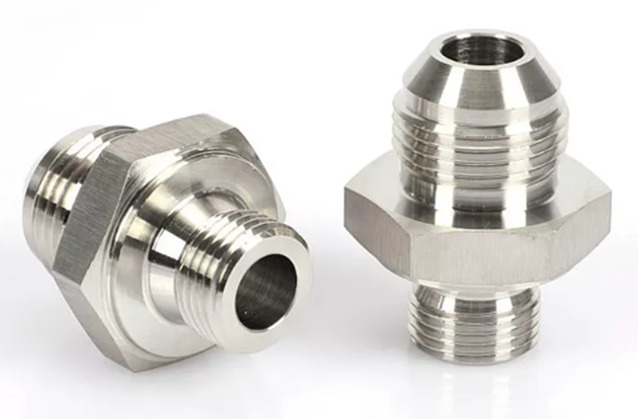
Banjo fittings are used where space is limited or where flexible orientation is required. They allow fluid to pass through a hollow bolt while enabling the hose or tube to pivot around the connection point. This design is common in brake systems, compact hydraulic assemblies, and mobile equipment.
Orientation flexibility: Ideal for tight installation spaces
Seal types: O-rings or gaskets compatible with system fluids
Thread compatibility: Correct bolt size and thread pitch are essential
Environmental resistance: Stainless steel resists corrosion in humid or salty environments
Practical note: Accurate alignment and controlled tightening are critical to avoid seal damage and long-term leakage.
Pipe fittings form the backbone of large-scale fluid networks. They connect straight pipe runs and change flow direction using elbows, tees, reducers, and adapters. Stainless steel pipe fittings are widely used in high-pressure and corrosive environments.
Thread standards: NPT, BSPP, BSPT, UN/UNF, or metric
Pressure and temperature limits: Must match real operating conditions
Dimensional accuracy: Ensures proper alignment and flow efficiency
Material durability: Stainless steel resists corrosion and thermal stress
Practical note: Consider vibration, thermal expansion, and mechanical loads during system design to maintain joint integrity over time.
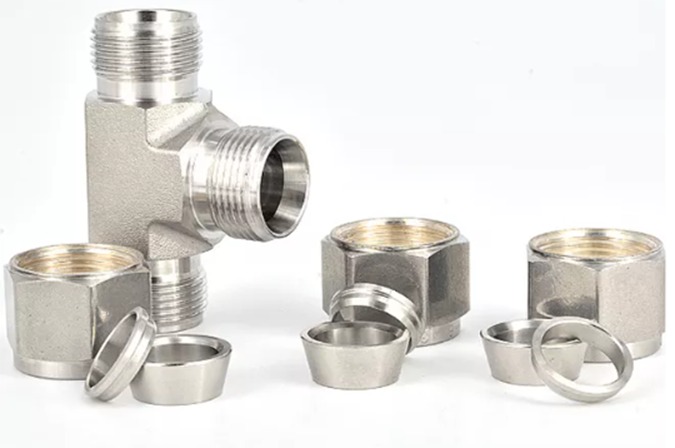
Tube fittings connect rigid tubing in hydraulic and pneumatic systems where precision and leak-tight performance are critical. They are widely used in high-integrity applications such as hydraulic power units and LNG systems.
24-degree cone fittings (DIN 2353 / ISO 8434-1)
37-degree flare fittings (SAE J514 / JIC)
O-ring face seal fittings (ORFS – SAE J1453 / ISO 8434-3)
Sealing method: Cone, flare, or O-ring face seal
Standard compatibility: Match DIN, ISO, or SAE system requirements
Surface finish: Clean, burr-free sealing surfaces
Tube compatibility: Correct outer diameter and material
Practical note: Cleanliness during assembly is essential to avoid damage to sealing surfaces and ensure leak-free operation.
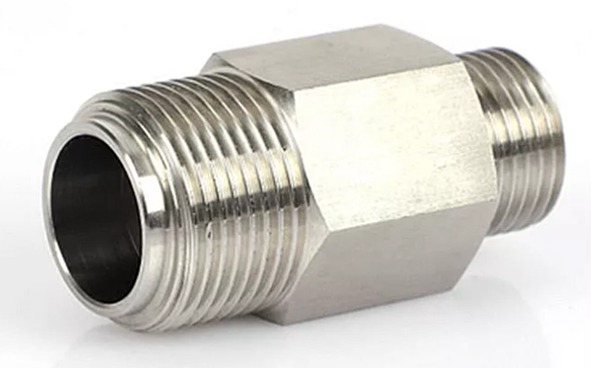
Compression fittings use ferrules to create a strong metal-to-metal seal between the tube and fitting body. They are valued for ease of installation and reliable sealing without welding or crimping.
Ferrule design: Front and back ferrules provide strong grip and sealing
Tube preparation: Clean, square-cut tube ends are essential
Pressure performance: Suitable for high-pressure, vacuum, and thermal cycling
Installation accuracy: Correct tightening procedure is critical
Practical note: Compression fittings are ideal for field installations and retrofit projects where specialized tools are unavailable
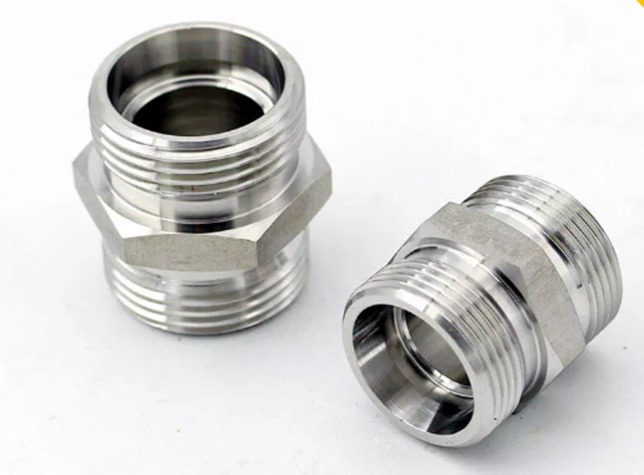
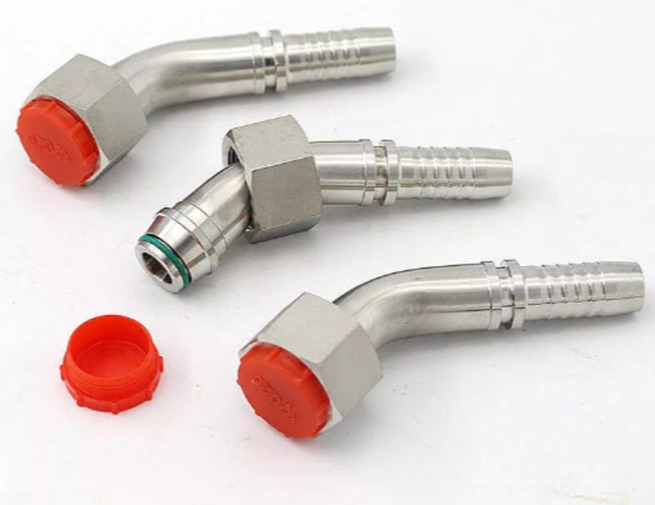
Hose fittings connect flexible hoses to rigid components, allowing movement and vibration absorption. Stainless steel hose fittings are compatible with braided, spiral, PTFE, textile, and thermoplastic hoses.
Hose compatibility: Diameter, reinforcement type, and material
Connection style: Crimped, clamped, welded, or interlock designs
Environmental resistance: Stainless steel withstands corrosive conditions
Pressure and temperature ratings: Must include surge conditions
Practical note: Two-piece fittings simplify hose replacement, while one-piece crimped fittings are ideal for OEM and production environments.
To ensure long-term system reliability, consider the following when selecting fittings:
Operating environment and fluid compatibility
Pressure and temperature requirements
Industry and regional standards
Installation and maintenance needs
Supplier reliability and product availability
High-performance fluid systems demand fittings manufactured to strict standards. Reliable suppliers provide material certifications, dimensional accuracy, and pressure testing documentation. This ensures compatibility, safety, and traceability throughout the system’s lifecycle.
Stainless steel fittings are widely used in:
Wind energy and renewable power systems
Chemical and pharmaceutical processing plants
Marine and offshore installations
Mobile hydraulics and heavy equipment
Power generation and high-temperature processes
Stainless steel fittings are the foundation of durable and reliable industrial fluid systems. By understanding the six primary fitting families and selecting components based on standards, materials, and application requirements, engineers and technicians can achieve leak-free performance, reduced maintenance, and extended service life.
Careful selection and proper installation ensure that fluid systems not only perform efficiently today but remain dependable for years to come.
.